
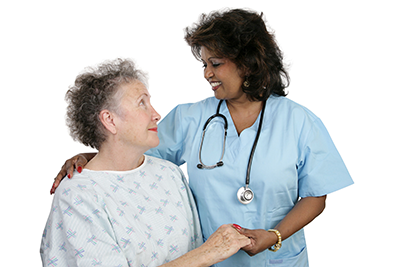
This course is intended for those interested in exploring a career as a Home Health Aide or Personal Care Aide. In some countries, HHA or PCA are simply referred to as Health care Assistants.
Course Outline
Module 1: This focuses on what home care is, the history of home care, and who is part of the home
care team. You will be introduced to the variety of tasks a Home Health Aide/Personal Care Aide may perform
and the important role they play on the home care team.
Module 2: This has three sections. The first section focuses on the physical and psychological needs
of human beings, and the influence culture has on the behavior, values, and health care practices of people. In the
second section, you will you will learn how to effectively communicate with and develop a positive working
relationship with patients. You will also learn how to properly document care provisions. In the final section,
you will learn the types of and signs of abuse and how to protect patient rights, such as the right to privacy and
confidentiality.
Module 3: This addresses the special needs facing the elderly patient. You will learn how societal
attitudes about aging influences the well-being and care of elderly patients. You will also learn about the
physical and psychological changes that occur as people age and how to best meet the needs of the elderly
patient.
Module 4: This focuses on the unique needs of children who receive home care services. You
will learn about the physical and psychological changes that occur throughout development from infancy to
adolescence. You will also learn how to help children and teens cope with stress and to develop positive coping
skills.
Module 5: This examines what mental health and mental illness are. Specific mental health issues
such as anxiety, depression, and schizophrenia are addressed, with special focus on how to help the Home Health
Aide/Personal Care Aide effectively work with people who have a mental illness.
Module 6: This discusses what a developmental disability is, what some of the causes are, and how
functioning is affected in the person with a developmental disability. Special attention is paid to learning about
intellectual disabilities, cerebral palsy, autism, and neurological impairments. You will learn how to effectively
work with patients who have a developmental disability to help them be as independent as possible.
Module 7: This examines what a physical disability is, the various causes of physical disabilities, and
the difference between a physical and developmental disability. You will learn about the special adaptations
people with physical disabilities may need to make and how the Home Health Aide/Personal Care Aide can best
work with people with a physical disability.
Module 8: This addresses the basics of nutrition. You will learn about the important role the major
nutrients such as carbohydrates, protein, and fats play in people’s physical well-being. You will learn how to
plan nutritious meals using the USDA’s ChooseMyPlate guidelines. The various diets such as low salt, low fat,
vegetarian, gluten-free, and mechanical diets for people with swallowing difficulties will be covered. You will
also learn food preparation techniques and about food safety.
Module 9: This examines how the Home Health Aide/Personal Care Aide can help patients
effectively manage their money and develop a budget. You will learn how to help a patient track expenses, and
plan a budget based on their income and household expenditures. You will also learn guidelines for helping
patients cut grocery, household, and energy costs.
Module 10: The focus of this chapter is on the importance of and how to perform housekeeping as a Home
Health Aide/Personal Care Aide. You will learn how to use proper body mechanics to prevent injury and how to
develop task lists and to prioritize tasks. You will also learn about various cleaning products and how to perform
specific housekeeping tasks in each room of the home, including: the kitchen, bathroom, bedroom, living room,
and how to launder clothing.
Module 11: This examines the types of injuries that can happen in the home, including: falls, burns,
cuts, poisoning, choking, and fires. You will learn guidelines for preventing these types of injuries as a Home
Health Aide/Personal Care Aide. You will learn basic first aid information for handling these types of injuries.
Special attention will be paid to learning how to deal with serious medical emergencies, such as heart attacks,
seizures, and strokes.
Module 12: This focuses on how to provide personal care for the home care patient. The importance
of infection control and the role of the Home Health Aide/Personal Care Aide in preventing infection
transmission is discussed. Tasks including bathing, teeth and mouth care, dressing and grooming, assisting with
eating, toileting, transferring from a bed to a wheelchair, and assisting patients with the self-administration of
medication are covered. You will also learn how to care for an infant during handling, feeding, and bathing.
Numerous videos are available within this chapter to illustrate concepts discussed.
Course Features
- Lectures 61
- Quizzes 12
- Duration 8 weeks
- Skill level All levels
- Language English
- Students 411
- Assessments