
Aging and the Individual
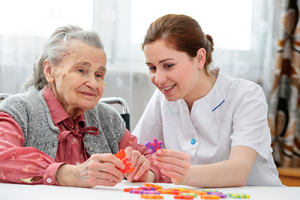
Aging is a normal physical and psychological process that all humans go through as they move throughout the lifespan. Lifespan means the length of time that a person or living thing can be expected to live. As people age, or get older, there are many changes that occur within their bodies (physical changes) and within their minds and behavior (psychological changes). These changes are known as human growth and development.
While all humans go through the same stages of development as they age, no two humans will have the same exact experience of development. Everyone has different experiences as they move throughout the lifespan. Psychological, environmental and social factors such as stress and financial situations impact the pattern of people’s development. Biology or genetics (a person’s genes) also has a strong influence on how people develop and the physical changes that will occur. Diseases such as heart disease, infections, strokes, and the use of substances such as alcohol and drugs all affect physical changes that occur in the human body.
Each person will have different experiences of development throughout their lifespan, which result in development being a unique and highly individualized process for each person. It is important to understand the general physical and psychological changes and stages of development that humans go through. And, it is even more important to understand that no two people will go through these stages in exactly the same way. Keep in mind that each person is a unique individual.
Social Factors & Aging
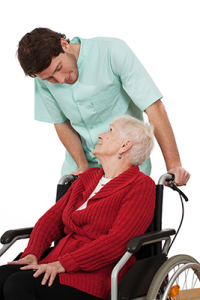
Changes in family structure and the role that one has in the family occur throughout the lifespan. While an elderly person may still be considered to be at the head of the family, their role may have changed now that they are older. For example, an elderly person may now not be able to provide for their family financially and physically. Younger members of the family may take on the role of financial provider or as caretaker. Families must make adjustments to the changes that occur throughout the lifespan. These can be emotionally and physically difficult. They can put great strain on members of the family and on the elderly patient.
The communication skills from Module Two are good tools to help people deal with new emotions. Home Health Aides/Personal Care Aides must be sensitive to the adjustments their patient’s family must make. They must perform their job well and refer any issues that they cannot competently handle to their supervisor. Also, they should empathize with family members. If a family member comes to them with a problem, listen to their concerns. Sometimes just talking about a problem can make a person feel better about it. Home Health Aides/Personal Care Aides must be supportive and encouraging. Paraphrasing what the person says and summarizing the feelings they are conveying (what they are trying to express) is most helpful. They should demonstrate empathy and positive regard toward their patient and their family members.
Be aware of cultural values and differences. As discussed in Module Two, members of African American, Asian, Latino, and Middle Eastern cultures place a strong emphasis on the role of family and may be very involved with the elderly patient’s care. They may prefer to take on caretaking responsibilities at home, rather than place their elderly loved one into a long-term care facility. Gender differences also exist within the various cultures. Middle Easterners may prefer to have their health care provided by a member of the same gender. As discussed in Module Two, the concept of machismo for Latinos means male members of the family feel a certain amount of responsibility to provide for other family members. When a male member of a Latino family becomes ill, it can have a heavy emotional and financial burden on that person and their family. If they were the sole bread winner, there will be a financial strain upon the family. The eldest son or the wife may need to take on employment in order to support the family. This shift in family role can be very unsettling and emotionally taxing for all family members.
Within the United States, the head of the household and primary bread winner has traditionally been the male. Even with the shift in gender roles within the United States where most women are now employed and have fulfilling careers, gender stereotypes still exist. An elderly male who can no longer provide for his family physically or financially may have a difficult time adjusting to this shift within the family. He may feel his masculinity is being questioned if he now must be cared for by another person, such as a Home Health Aide/Personal Care Aide. These psychological adjustments are difficult, but with the support and empathy of a Home Health Aide/Personal Care Aide, the patient and family can better make adjustments to developmental changes. Religious beliefs also influence how people practice health care rituals, prepare for death and care for loved ones after death. Refer back to Module Two for a review of various cultural and religious beliefs and how they impact health care a person wishes to receive.
Observing & Reporting Changes
As Home Health Aides/Personal Care Aides work with elderly patients, they may come to have first-hand knowledge of the physical and psychological changes that occur during the aging process. They may also come to recognize and be the first to notice signs of a new disorder or disease process that is not related to the aging process, but which can be mistaken for and disregarded as “just aging.” For example, it is not a normal part of aging to have dementia. If their patient suddenly begins to show signs of forgetfulness, difficulty concentrating, or disorientation (an inability to recognize themselves, where they are, what year or season it is or events that are occurring), they should immediately report these signs to their supervisor. These signs are not necessarily due to “just aging”. They could be signs of a stroke, dementia related to Alzheimer’s or a vascular (blood vessel) problem, such as changes in oxygenation within the brain.If Home Health Aides/Personal Care Aides notice any of the following, especially if they occur suddenly, they should immediately report them to their supervisor:
- Disorientation (to self, place, time, event)
- Difficulty concentrating
- Difficulty speaking
- Difficulty chewing/swallowing
- Depression
- Suicidality (statements of wanting to die or hurt oneself)
- Mood changes or sudden shifts in mood from happy to depressed
- Insomnia (difficulty getting to or staying asleep)
- Anorexia (lack of appetite/eating)
- Inability to use a limb (arm or leg)
- Drooping of the face, either one side or both sides of the face or mouth
- Lack of balance or coordination
- Changes in grooming or self-care
- Incontinence (loss of bladder or bowel)
- If something just doesn’t seem “right” to them based on what they know of the patient
Confidentiality
It is important for Home Health Aides/Personal Care Aides to remember to protect their patient’s privacy at all times. This means providing privacy during self-care such as bathing, toileting, and dressing. It can be easy to forget to do this if they are rushed, or if family caretakers are around. But remember, Home Health Aides/Personal Care Aides are there to care for and protect their patient. It is also important to remember to maintain confidentiality of what their patient tells them and about their health care. Only share information with family and friends whom the patient wishes to share with. Just because a patient is elderly does not mean that they do not have the right to privacy and confidentiality. Do not be dismissive of their wishes, even if they are forgetful. It is up to the Home Health Aide/Personal Care Aide to protect them.
Attitudes Toward Aging
Ideas about the elderly are often based upon stereotypes and depictions of older adults in the media. Older people are often shown to be helpless, forgetful, slow, have dementia, to be incontinent (unable to hold their bladder), unable to live on their own, and to be unable to engage in physical activity. In actuality, research shows that the majority of older people are active and very involved in life activities.
In the media, elderly people are often referred to as “cute” with younger people calling them “honey”, “dear” and “sweetheart.” These terms are often condescending and should never be used to refer to an elderly patient. Home Health Aides/Personal Care Aides should always address their patient with their last name and title, such as Mr. or Mrs., unless they request otherwise. Speak with elderly patients with respect and allow them to make their own decisions and choices as much as possible. Do not treat them like a child. Just because they may be dependent on others for their care as a child is does not mean they are children. It just means they need a little extra help.
Magazine and television advertisements focus on youth and equating it with beauty. This leaves the impression that young=beautiful and good, while old=ugly and bad. These stereotypes result in what is called ageism. Racism as we discussed in Module Two is discrimination based on someone’s race. Ageism is discrimination against someone based on their age. Ageism is harmful to older people and can result in depression, anger, loss of employment, loss of housing, and loss of emotional support.
Myths of Aging
According to Mauk (2008), by the year 2030, about 20% (71 million people) of the U.S. population will be over the age of 65. As many of the patients with whom the Home Health Aide/Personal Care Aide will be working will be elderly, it is important to learn about the aging process and to avoid engaging in ageism.
True or False? Review the Myths Below!
- The elderly are all alike.
False—as we age, we actually become more different. This is due to our unique life experiences. As is any other age group, the elderly are a diverse group.
- Most elderly people are senile or have dementia.
False—Dementia is not a normal part of aging. Signs of confusion and changes in mental status in older adults should be looked into immediately. They can be a sign of a urinary tract infection, dehydration, stroke, or medication interaction or side effect. Most elderly people do not have dementia. This is a common stereotype presented in the media.
- The elderly have no worries once they retire as they can enjoy their life.
False—Many elderly people have many worries as they age. They may face poverty, loss of social stature, loss of social connections, health problems, and loss of independence.
- Elderly people no longer desire or have sexual relations.
False—Sexual desire and relationships do not decrease with age. The media and society often believe that older people should not have sex. This could result in feelings of guilt on the elderly person’s part, which could result in the elderly person not having sexual relations as they might wish. Physical problems could also result in the inability to have sexual relations in the way the elderly person used to, but research shows that the majority of elderly people still desire and continue to have sexual relations.
- Most elderly people are “set in their ways” and will not change.
False—While older people may be slower to change their opinion than younger people, the majority of elderly people are open to change. In fact, they face many changes due to changes in physical health, social connections, death of loved ones, and illnesses.
- Elderly people are unproductive and uncreative.
False—Many elderly people continue to be productive members of society. Even though many elderly people have retired, some continue to work in order to meet financial obligations or to continue to remain active. Outside of work, elderly people may volunteer within their community, be involved with their families, and serve as caretaker for grandchildren while their children are at work.
- The elderly have a hard time learning and are less intelligent than younger people.
False—All age groups learn at a different rate and in different ways. In fact, older people have intelligence from life experiences that younger generations do not. They can offer valued wisdom based on their own life experiences to others around them. Research shows that while we do lose brain cells, we continue to gain new ones and to build new connections within our brain. The best way to build new brain cells is to remain active and continue learning throughout the lifespan.
- Elderly people are grouchy and hard to get along with.
False—This is another stereotype often seen in the media. People who tend to be grouchy and have a hard time getting along with others when they are younger will likely continue to do so when they are older. Research shows that our personalities are generally set by the time we are 30 years old.Happiness has nothing to do with aging, and in fact, the later years can be some of the happiest times of people’s lives. They may have more freedoms than they did when they were younger and be more confident and secure in themselves than when they were younger.
- Most older people fall from time to time.
False—Although fall risk does increase with age, most elderly people do not fall. If a patient falls, the cause of the fall should be investigated. The fall could be due to an infection, medication side effect, or household hazard.
- Most elderly people are incontinent (unable to control their bowels or bladder).
False—Bladder or bowel incontinence can affect people at any age. While the risk of incontinence does increase as people age because of loss of muscle tone, people of any age can suffer from incontinence. It is a stereotype that all elderly people are incontinent. New onset of incontinence should be investigated right away as it could be a sign of a urinary tract infection, medication side effects or electrolyte imbalances.
This information has been adapted from the Oregon Department of Human Services’ Myths and Stereotypes of Aging booklet.
Introduction
It is important to remember that aging is a normal process and is not a disease or a sentence that a person will end up with a disability. As Home Health Aides/Personal Care Aides will likely work with many elderly patients, it is important for them to have a general understanding of the physical and mental changes that occur during the aging process.