
Introduction to Religions of the World
There are numerous religions and spiritual beliefs. Religious beliefs influence people’s values, morals, behaviors, and traditions. Religion may be important to some people and unimportant to others. Some people consider themselves to be spiritual, but may not practice or be affiliated with a particular religion. Other people do not believe in any religion or God. Only some of the more common religions are discussed here. Remember, even if a patient practices one of the religions discussed, they may or may not adhere to the beliefs or practices described. Always ask a patient what their individual beliefs and practices are.
Buddhism
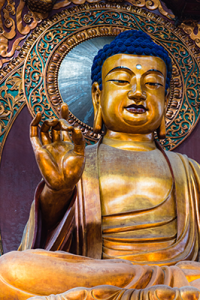
Buddhism is based on the teachings of Siddhartha Gautama, known as Buddha. While this religion started in Asia, it is practiced worldwide. Buddhists believe in The Four Noble Truths: that suffering exists, that there is a cause to the suffering, there is an end to the suffering, and there is a way to bring the suffering to an end. Desiring material belongings, immortality, and pleasure leads to suffering. To end suffering, one must achieve Nirvana, which is a state of spiritual heightening in which there are no desires or suffering. To achieve this, Buddhists believe they must follow the Noble Eightfold Path which includes: Right Understanding, Right Thought, Right Speech, Right Action, Right Livelihood, Right Effort, Right Mindfulness, and Right Concentration. Practicing meditation, good moral conduct, and achieving insight are the ways to follow this path. Death is viewed as the ending of the physical body, and the spirit will live on in a new form, or rebirth occurs. After the death of a person who practices Buddhism, the body should be left alone for 3-8 hours untouched, as the Buddhists believe that the spirit lingers for some time.
Christianity
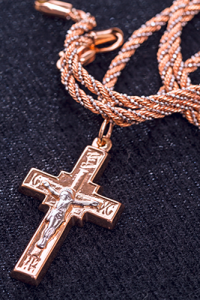
Christianity is the world’s largest religion and is based on the teachings of Jesus Christ, who lived 2,000 years ago. Christians believe that Jesus was the Son of God who was sent to Earth to save humans from the consequences of their sins. Important holy days include Easter and Christmas. Christians believe that Jesus gave his life on the cross (Crucifixion), which occurs on Good Friday, and that he rose on the third day (Resurrection), which is Easter day. Christmas marks the day of Jesus’ birth. The Christian holy book is called The Holy Bible, which consists of the Old and the New Testaments. Most Christians worship in a church and communicate with God through prayer. Christians believe in baptism, which is the process in which a formal commitment is made to God.
There are many denominations of Christianity, each with a different set of practices. Some of these groups include Methodist, Mormon, Presbyterian, Baptist, Episcopalian, Seventh-day Adventists, Lutheran, and Roman Catholic. Religious leaders may be called priests, pastors, preachers, or deacons, depending on the denomination. Some Christians may practice dietary restrictions, such as not eating meat or fasting during the Lenten season, which is approximately 40 days prior to Easter, starting on Ash Wednesday. Mormon diet prohibits tea, cola, and coffee. Some Christians may have sacred objects in their homes or worn as jewelry, such as images of saints and holy crosses.
Hinduism
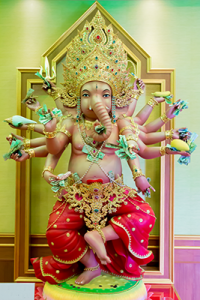
Hinduism is largely practiced in India. It is the world’s oldest religion, and there is no founder. There are four sects, or divisions, of Hinduism: Shaivism, Shaktism, Vaishnavism, and Smartism. Each has some different beliefs and practices, but all believe in one supreme being, who is the creator of all things. Hindus follow the four Vedas, which are ancient scriptures. Hindus also believe in reincarnation, which is the belief that the soul reincarnates, or returns after the physical body has died into a new body. This process is meant to help karma become resolved. Karma is the belief that consequences are caused by actions, and that people create their own destinies by their thoughts and actions. Hindus believe that all life is sacred. Many may be vegetarians. After the death of a person who practices Hinduism, the body must be bathed, massaged with oil, dressed, and cremated prior to the next sunrise.
Islam
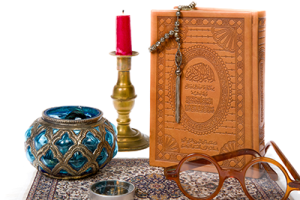
Islam, the second largest religion in the world, began in Mecca, Arabia over 1400 years ago. People who practice Islam are called Muslims. Prophets of this religion include Adam, Moses, Abraham, David, Jesus, and the final prophet to whom credit for the start of Islam is given; Muhammad. Muslims believe in one God, called Allah. Many Muslims pray five times per day, facing Mecca, the holy city. Mosques are the places of worship for Muslims. Outside of mosques is a place for people to leave their shoes and to wash prior to entering to pray. Prayer is done sitting on the floor and facing the direction of Mecca. Mostly men attend prayer services in mosques, and when women do, they pray in a section separate from the men. The Qur’an, which is the sacred word of God as revealed to the prophet Muhammad over 23 years is the holy book of the Islamic faith.
Muslims believe in predestination, that Allah has knowledge of all that will happen. However, Muslims do believe in free will, that they can make their own choices in life. Muslims also believe in the Day of Judgment, in which every human will be judged to determine if they will go to heaven or hell. The most important practices of Muslims are the Five Pillars. These are obligations that every Muslim must meet within their life in order to get to heaven. They include being sincere within one’s Muslim faith, praying five times per day, paying charity to the poor, fasting during Ramadan, and making a pilgrimage (a visit of faith) to Mecca once in their lifetimes.
Ramadan, a holy period, is the ninth month in the Islamic calendar. During this month, adults must give up food and drink, smoking, and sexual activity during daylight hours. The month of Ramadan ends with the festival known as Eid al-Fitr, in which Muhammad is thanked for giving Muslims strength to practice self-control over the last month. Celebrations with family and services are attended at mosques in which Muslims wear new or their best clothing. Most Muslims do not consume alcohol or pork. Women dress modestly with long skirts and shirts within the Muslim faith and may wear a hijab, a veil covering the head and chest. Some Muslims believe all parts of a female should be covered except the eyes, while others believe all parts should be covered except the face and hands. The name for the garment which covers all of a woman except her eyes is called a burqa. It may be forbidden for members of the opposite sex to touch.
Judaism
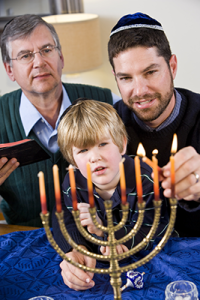
udaism originated in the Middle East over 3500 years ago and was founded by Moses, although Jews trace their history back to Abraham. Abraham was a leader appointed by God and was the first to teach that there was only one God. The Torah, written in Hebrew, which is the oldest Jewish language, is the religious book of the Jews and consists of the 5 books of Moses. Jewish people believe that God dictated the words found within the Torah to Moses on Mount Sinai, after the Jews were exiled from their slavery in Egypt. The Torah is read in completion every year during synagogue or temple, which is where Jewish people attend services. A rabbi usually conducts services and serves as a religious leader for Jewish people. The Torah contains 613 commandments by which Jews live their life. Judaism is divided into Reform, Conservative, and Orthodox movements, all with some differences in practice and belief. In Orthodox Judaism, men and women sit separately in synagogues and services are conducted in ancient Hebrew. Some Jewish men wear a yarmulke or kippah, a small cap to cover their head.
The holy day is called the Sabbath, which begins at nightfall on Friday and lasts until nightfall on Saturday. The Sabbath is a time of rest and worship, in which candles may be lit, the Sabbath wine and meals with prayer shared. Hanukkah is the Jewish Festival of Lights, lasting 8 days, in which a menorah with 8 candles is lit, one each day. This holiday celebrates the Jewish people’s struggle for religious freedom. Rosh Hashanah is another holy day which lasts two days, in which the creation of the world is celebrated on this Jewish New Year. It is also known as Judgment Day, in which God reviews one’s good versus bad days throughout the year. On Yom Kippur, or Day of Atonement, which is the most sacred day of the year for Jewish people, marks the day when God’s judgment comes to an end. The Book of Life, in which one’s year has been reviewed closes. This determines how the course of the next year will go for each person. During holy days and the Sabbath, special foods are shared and fasting may occur, such as in the 25 hours prior to Yom Kippur.