
Introduction to Child Growth and Development
As children grow and develop, they go through many physical, cognitive, and emotional changes. These changes are known as human growth and development. All children will go through these stages, but they may not go through them in the same manner or rate as other children. It is important to remember that all children are unique. Jean Piaget, a famous developmental psychologist had a theory called the Cognitive Development Theory. It is widely used today to understand the cognitive development of children. He believed that children go through four stages as they construct (make and understand) meaning of the world.
Sensorimotor Stage (birth to 2 years)

Infants construct an understanding of the world as they interact with it using their senses. Infants use the sense of sight, hearing, touch, smell, and even taste to learn about the world around them. Their senses are combined with physical actions and muscle movements such as pushing, pulling, and kicking to make sense of objects around them. For example, a baby kicks a brightly colored ball and learns to understand that they can make the ball move by using their muscles. However, if the ball is out of their sight, they will no longer think about it until they develop object permanence, which occurs at the end of this stage. Object permanence is the understanding that something exists even though it is no longer in sight.
Preoperational Stage (2 to 7 years)

During this stage, children learn about their world beyond just senses and using motor actions. They also learn to understand the meaning of words and images. They learn about the world by looking at pictures, symbols, and books. Piaget believed that children at this stage cannot perform operations or solve problems mentally, but still focus on the physical understanding of the world. For example, a child in this stage could not say if there was the same amount of liquid in two glasses even if they saw you pouring equal amounts of liquid in two cups, with one cup tall and the other short. To a child in this stage, there appears to be more liquid in the short glass because the glass appears to be fuller. Children in this stage also believe that inanimate objects such as toys and trees have human like qualities.
Concrete Operational Stage (7 to 11 years)

In this stage, children learn to perform operations such as math and to reason logically. However, Piaget believed that children at this age can only do this with concrete things (things that are right in front of them). He felt they are unable to reason about abstract things (things we can only think about or imagine). If a child in this stage was shown the same two glasses as in the previous example, they would have an understanding that there was an equal amount of liquid, even though one glass is taller than the other.
Formal Operational Stage (11 years to adulthood)

At this stage, Piaget believed that people can move beyond what is concrete (or right in front of them) and think in abstract ways about things that are not right in front of them or which they can only imagine. They are able to reason and perform logical thinking about abstract things. People at this stage begin to think about the possibilities of what could be in the future.
Infancy: Birth to 12 months

Physically, infants grow very quickly. Infant growth occurs from the head down. This is the reason why an infant’s head may appear bigger than their body. Infants gain control over the head and neck muscles before they gain control over their arms and legs. It is very important to remember to always provide support for an infant’s head and neck as they do not have the ability to provide this support for themselves. Never rush a baby to perform any skills they are unable to do before they are physically ready. For example, people should not rush an infant to walk if they are not yet able to stand. Infants typically crawl before they sit and sit before they stand or walk. Infants require a lot of sleep during this time period and may sleep between 10 and 21 hours per day. Home Health Aides/Personal Care Aides should provide the baby with a safe environment in which to sleep, such as a crib. Do not put stuffed animals or too many blankets in the crib as this could potentially lead to suffocation.
Language development is also very fast at this stage. Babies move from saying a word or two at around 12 to 13 months to having a vocabulary of about 200 words by 2 years of age! It is important that children have plenty of interaction with others who speak with them in order to develop their language skills. Infancy is also an important time for children to begin to develop trust in others. Home Health Aides/Personal Care Aides should ensure that the baby they are working with has all their needs met such as being fed, bathed, changed when diapers are soiled, and comforted when they are crying. This helps to support positive development and trusting relationships in caretakers. According to Piaget, a child at this stage would be in the sensorimotor stage. To support cognitive development of children at this age, Home Health Aides/Personal Care Aides should provide lots of stimulation with safe toys they can touch and move with a variety of colors and shapes. Allow babies to explore their environment in safe ways. Babies are very interested in putting things into their mouths to explore their world. Provide safe toys for a baby to do this.
Toddler: 1-3 years
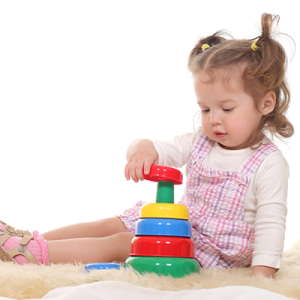
Toddlers continue to grow and develop physically. This is also a time of great growth cognitively and socially. Children at this stage advance with their ability to use gross motor skills (activities using large muscles such as kicking a ball or walking) as well as fine motor skills (activities using smaller muscles such as picking up paper or drawing).
Toddlers have a desire to become independent as they now see themselves as separate from their parents or caretakers. Independence should be encouraged in a safe manner. For example, infants who want to climb the stairs themselves should not be allowed to do so. However, with support and careful assistance from a HHA/PCA standing behind them and providing assistance, toddlers can learn to go up the stairs one at a time safely.
Toddlers also learn to gain control over their bowel and bladders during this time. Praise should always be provided during toilet training and children should not be scolded if they have “accidents” or wet the bed. This will only damage their self-esteem.
Since this is a time of great exploration, care should always be taken to provide for a safe environment. Medications, cleaning supplies, and other hazardous chemicals and objects should be locked up and away from a toddler’s reach. Home Health Aides/Personal Care Aides should provide encouragement for a toddler to explore their environment and to play games such as make-believe.
This is also an important time to develop routines and rules to follow. Toddlers may have temper tantrums when they do not get their way and scream, kick, or throw things. Home Health Aides/Personal Care Aides should remain calm and be firm yet gentle as they redirect them toward another activity.
According to Piaget, children at this stage are in the Sensorimotor to Preoperational Stages, depending on their age. Children at this age begin to represent the world using symbols, and inanimate objects can take on lifelike qualities. There is a great deal of imagination at use. Puppets, coloring, drawing, and make-believe play are good opportunities to help a child develop cognitively at this stage. Exploration of the environment around them is important. Home Health Aides/Personal Care Aides should provide lots of play opportunities for the child. Allow them to learn what they are capable of doing, such as building towers with blocks. Home Health Aides/Personal Care Aides should assist with development of language by reading to the child and pointing to objects in books as they name them.
Preschool: 3-6 years

Physical development continues during the preschool years. Gross and fine motor skills continue to develop. Physical activity is important to help children develop motor skills and to maintain healthy weight. During the preschool years, children continue to gain independence and begin to form social relationships.
Vocabulary and language development is very fast. Home Health Aides/Personal Care Aides should continue to read to the child but allow them to read if they are able. Provide lots of encouragement and praise during reading to help build self-confidence. Encourage children to develop language and fine motor skills through writing and drawing activities.
This is also a good time to begin to teach children right from wrong and to take on small responsibilities within the home such as cleaning up their toys or helping to set the table. This will encourage self-esteem to flourish. According to Piaget, the child continues to be in the Preoperational Stage of cognitive development. Home Health Aides/Personal Care Aides should continue to provide play opportunities and encourage imagination and exploration of the world around them.
School Age: 6-11 or 12 years

School age children continue to grow but at a more consistent and steady rate than in earlier childhood. Children at this age become involved in many physical activities which continue to help improve their muscle coordination and balance. Children often become involved in activities such as running, bike riding, skating, and swimming. These are good activities for children and will help them to maintain a healthy weight.
The school age years are a time of great cognitive and social growth. Children enter school often for the first time and begin to develop social connections and friendships. They begin to learn gender behaviors (how females and males act). Their sense of self-esteem is developing and opportunities to encourage and praise should be sought.
School age children may need assistance with completing their homework and studying for exams. Home Health Aides/Personal Care Aides should provide opportunities for children to read by allowing them to read to them or their loved ones and to practice writing skills. Provide lots of encouragement and praise during reading to help build self-confidence. Provide assistance when the child struggles with a word but do not take over or make them feel badly for not being able to recognize a word. Help them to sound it out. This is the time period when learning disabilities may become apparent. If Home Health Aides/Personal Care Aides notice the child appears to struggle with keeping attention, reading, writing, or with math, they should inform their supervisor. There are many support systems in place within schools to help children who struggle with learning. Specialists such as speech therapists and social workers may be added to the team to work with children who struggle with speech problems or emotional issues.
According to Piaget, children at this stage are in the Concrete Operational Stage and are better able to reason logically if there are specific and concrete situations. Support their cognitive development by working with them with games such as memory and using math and language workbooks.
Adolescent: 11 years to 19 years

The adolescent years are when puberty occurs. Puberty is a stage of development when hormones change and secondary sex characteristics such as body hair, breast and testicular growth occurs. Teens may begin to shave for the first time. Self-care is important and opportunities to provide assistance and encouragement to maintain personal hygiene should be provided. Teenagers may suffer from oily skin and acne and care should be taken to keep the face and body cleaned. Most teens become very focused on their appearance during this time and may need encouragement and support to deal with changing moods and worries about how they look or if peers like them.
This is also a time where peer pressure (pressure from other children of the same age) can become intense. Teens may experiment with romantic or sexual relationships, drugs, alcohol, or smoking. This is a good time to provide education about these topics. If Home Health Aides/Personal Care Aides have any concerns about a teen they work with using substances such as alcohol, drugs, cigarettes, or engaging in sexual activity, they should inform their supervisor.
Some teens may experience eating disorders because of concerns about their physical appearance. Anorexia is a disorder in which a person does not eat or exercises excessively. Bulimia nervosa is a disorder in which the person eats very large amounts of food and then purges (vomits) or uses laxatives to have bowel movements in order to eliminate the food. Both disorders have very serious physical and emotional consequences, and could result in malnourishment, serious physical problems such as heart disorders, and psychological problems such as depression or suicidal thoughts. Home Health Aides/Personal Care Aides should immediately inform their supervisor if they suspect the teen with whom they are working has an eating disorder or an emotional issue such as depression or thoughts of suicide. Medical and psychological intervention, and sometimes hospitalizations and medications may be necessary to help a teen with these disorders.
According to Piaget, adolescents begin to enter the Formal Operations Stage in which they can think in abstract ways about things that are not in front of them. Adolescents begin to wonder about their future lives. Home Health Aides/Personal Care Aides should support this development by discussing with them thoughts about what they would like to do in the future and support their interests and dreams.