
Qualities of Home Health Aides & Personal Care Aides
Taking care of someone requires that an aide have good physical health. Assisting a person to walk, get into a wheelchair or shower, and completing household tasks such as cleaning and cooking can be physically demanding. According to the U.S. Department of Labor, Home Health Aides and Personal Care Aides have a higher rate of injury and illness as compared to other jobs. It is important that an HHA/PCA takes good care of their physical health and protect themselves against injury. Using proper body mechanics will help protect against back and other injuries. This will be discussed throughout this course.
Grooming on a regular basis is important to maintain good physical health and appearance. It helps a person to feel good and shows others that they care about themself and others. Showering or bathing daily, brushing their teeth, using deodorant, and keeping their hair and/or facial hair well-groomed are important tasks to help the aide care for themself and others. Uniforms should be freshly laundered and appear neat, without rips, tears, or stains. Long hair should be tied or held back. Jewelry should be kept to a minimum. Makeup should be kept to a minimum, and strong cologne or perfume should be avoided, as it could be irritating to patients. Fingernails should be kept trimmed and clean. Artificial nails harbor bacteria and should be avoided. Hand hygiene is extremely important, as it is the best way to prevent the transmission of infectious diseases. HHA/PCAs should always wash their hands prior to and after performing a task when there is patient contact, and any time hands appear dirty. Gloves should be worn when providing patient care when an aide may come into contact with bodily fluids.
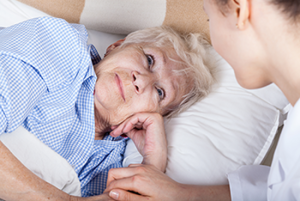
Working as a Home Health Aide/Personal Care Aide is very rewarding, but can also be emotionally challenging. An aide may work with a person with a cognitive or emotional disability who may display difficult behaviors. Patients who are in pain or who do not feel well may have mood swings or display behaviors that may be challenging to work with. Throughout this course, we will discuss ways to work with people who may have difficult behaviors. You will learn the skills you need to develop good communication skills to help you work with your patients.
Providing supportive care also requires that an aide be dependable, organized, responsible, trustworthy, patient, caring, and compassionate. As they will be working with people on a daily basis, it is important to be people-oriented and enjoy working with others. Patients and families allow home care workers to come into the privacy of their homes and take care of them in very personal ways. It is important that an aide be trustworthy, honest, and respectful. This means that they must respect a patient’s right to refuse a treatment or care, right to privacy, and right to practice any customs or traditions important to them.
The agency and patients depend on the HHA/PCA. They should report to work on time. The Home Health Worker/Personal Care Aide, will work as part of a team, but will also be required to work independently. This means that they will be asked to complete tasks that have been assigned to them by their supervisor and the agency for which they work. They will be asked to document completion of these tasks. Their team and their patient depend on the aide to complete these tasks and to document their completion honestly. If an aide experiences a problem with completing a task, they should seek direction and assistance from their supervisor. Part of this documentation will include the time that was spent performing patient tasks and any travel time or mileage the aide may put on their vehicle. Many agencies may reimburse for mileage and will have policies in place for the time spent traveling to the work site.