
Why Children May Need Home Care – Part 1
In this module, we will be discussing the specific needs of children who receive home care services. We will discuss why children may need home care and how the Home Health Aide/Personal Care Aide can best help meet the physical and psychological needs of children and their families. We will explore children’s growth and development starting from infancy and ending with adolescence. We will examine how children may react to stress and the various problems that may affect families such as domestic violence, substance abuse, and mental illness. Finally, we will discuss how to help children cope with stress and to strengthen families.
Why Children May Need Home Care – Part 1
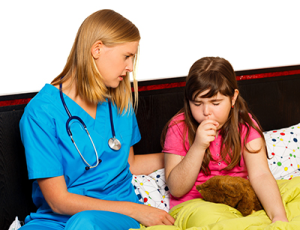
Children may face a number of situations in which home care is helpful to provide temporary care to recover from a medical illness or injury, or even long-term care if the child has a chronic illness or disability. Children who have sustained wounds, burns, or injury from a trauma such as a motor vehicle or sporting accident may benefit from receiving home care services. The child may need special medical care to treat wounds, perform dressing changes and to receive medications such as intravenous (IV) antibiotics (medications that are administered through a catheter into a vein). The child is able to receive the medical attention they need within their own home, while also reducing the financial burden on parents. Hospitalizations are very expensive.
Children who are mentally or physically disabled will also benefit from services provided by a home health care team. Just as in caring for an adult with a disability, children with mental or physical disabilities can receive care from a team of physicians, nurses, social workers, respiratory therapists, nutritionists, and a home health aide/personal care aide. By receiving home care services, the child may remain in the comfort of their own home, surrounded by the people and things they love, while also receiving necessary medical care and assistance with their activities of daily living (ADLs). Home care services for children with disabilities allows them to live as normal a life as possible with their family rather than living in a long-term care facility.
Why Children May Need Home Care – Part 2
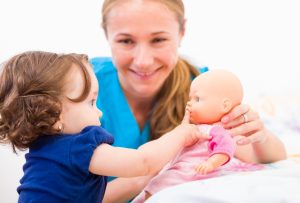
Children can have chronic illnesses just as adults do. Muscular dystrophy is a progressive disease in which there is a gradual wasting away of muscle. Cerebral palsy is a neurological disorder which affects motor development. Children with these disorders have difficulty with using their muscles and may need assistance with self-care such as feeding, toileting, and bathing. Children who have suffered from a head or spinal cord injury that has caused permanent brain damage and/or loss of function may also need assistance with self-care. A person with paraplegia (inability to use the lower part of the body) or quadriplegia (inability to use both the upper and lower body) is not able to fully care for themselves. Children also suffer from chronic health conditions such as diabetes, heart disorders, respiratory disorders such as cystic fibrosis and various types of cancer, such as leukemia. Vision and hearing disorders also affect children. Congenital disorders such as Down’s Syndrome, which is a genetic disorder that can result in cognitive and physical disabilities, may also affect children. Receiving home care services allows the child to receive the medical attention they need within their own home so they may be close to family and what is familiar to them. It also helps to reduce costs of hospitalizations and long-term care facilities.
Why Children May Need Home Care – Part 3
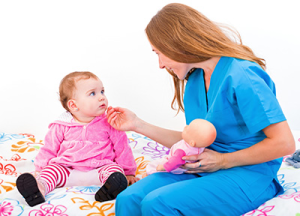
Home care services may also be used to help families who have recently given birth to a child who is premature (born before they are fully mature in the womb), or who has a physical disability due to a birth defect. Mothers and fathers may be overwhelmed by the care the new baby needs and may benefit from a home health aide/personal care aide providing them assistance as they adjust to the care of their newborn. A new parent may need assistance with providing care for the baby such as feeding, bathing, and diapering. They may also need assistance with providing self-care to the new mother, and with basic household tasks such as laundry, cleaning, meal planning, preparation, and shopping.
Premature babies are babies who are born before 37 weeks of gestation. These babies are born too early and are not yet fully developed. Premature babies may need special care once they are released from the hospital. Special attention must be paid to helping these babies meet their nutritional needs, monitoring intake and output, weight gain and vital signs to ensure they develop in the way they should. Sometimes, mothers who have not yet given birth may be put on bed rest to prevent complications of pregnancy. They may benefit from assistance from a home health aide/personal care aide in meeting their self-care needs and in preparing for the coming baby.
When a child has suffered from the death of a parent, they may also benefit from receiving home care services. The remaining parent or family members may be overwhelmed emotionally and unable to meet the physical and emotional needs of the child. Home health aides/personal care aides can provide housekeeping, meal planning and preparation, and completion of activities of daily living assistance for children and families in these types of situations. Finally, there are situations in which children face domestic violence, abuse, neglect, or substance abuse by a parent within the home. The home health care team can assist the child with meeting his or her physical and emotional needs, while monitoring the safety of the child within the home, and providing care for the entire family.
Introduction to Maslow’s Hierarchy of Needs Applied to Children
Just as adults, children go through stages of physical and psychological growth. In Module Two, we discussed Maslow’s Hierarchy of Needs. Here, we will discuss the specific needs of children according to this hierarchy and how to best meet those needs as a Home Health Aide/Personal Care Aide.
Physical Needs
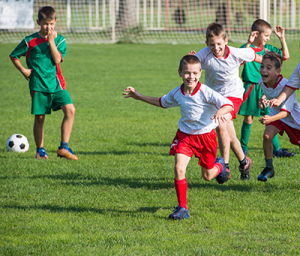
Children have the same basic physical needs as adults do. They need oxygen, food, activity, sleep, and must eliminate in order to survive. Home Health Aides/Personal Care Aides will work to help children meet their basic physical needs, just as they do with adults. They will assist them to complete Activities of Daily Living (ADLs) such as eating, drinking, toileting, bathing, and grooming. Taking vital signs, shopping for and preparing food for their patient, and measuring intake and output are other important tasks Home Health Aides/Personal Care Aides do to help patients meet their physical needs.
Safety and Security Needs
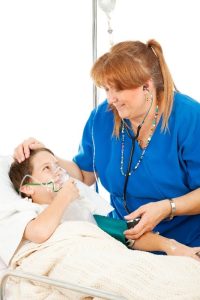
After meeting basic physical needs, children must have their safety and security needs met. This includes having a safe place to live and not feeling afraid within our homes, or of the people around us. Home Health Aides/Personal Care Aides work within the child’s environment to make their home safe so that the child feels safe. This means they will need to ensure that there are no hazards in the patient’s home such as clutter or loose rugs that could cause a patient to slip, trip, or fall. Special safety precautions for children also includes to make sure medications in the home are locked up, cleaning equipment is kept out of reach, and electrical outlets are kept covered to avoid children sticking their fingers or objects into them and risk getting electrocuted. Performing light housekeeping duties such as laundry, vacuuming, and cleaning, maintains a safe environment for the child.
Children who are sick often feel afraid. The job of a HHA/PCA is to help them feel secure by reassuring them, being patient when they try to complete tasks on their own, and being competent (good) in the tasks they complete. Home Health Aides/Personal Care Aides must also always be on the lookout for signs of abuse or domestic violence. Children need to grow in a safe environment. Home Health Aides/Personal Care Aides should document and report any signs of abuse or neglect to a supervisor immediately.
Need for Love and Belonging
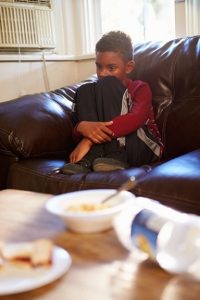
Once children have met their physical and safety/security needs, the need for love and belonging is the next important level in order for a child to grow and flourish. This need includes feeling that they are loved and cared for. Children need to feel important to other people and to feel that they are a part of something, such as a family or community. Children need to feel special and loved, and that they are a valued part of their family and community. For Home Health Aides/Personal Care Aides, the way they care for the children they work with demonstrates to them that they care for and about them. This means being patient, kind, compassionate, understanding, trustworthy and accepting their patient’s thoughts, feelings, and uniqueness, even if they do not agree with them.
Family is an important part of a child’s life and helps them to meet their need for love and belonging. We all have different views of what “family” means to us. Home Health Aides/Personal Care Aides should be careful not to judge their patient’s family or the ways they think care should be provided to the child. Include the patient’s family in their care whenever possible. HHAs/PCAs may also be educating parents and other caretakers in how to care for the child. The need to socialize with other children is also very strong. Children with disabilities may not have as many opportunities to socialize with other children. Home Health Aides/Personal Care Aides should provide opportunities for the child to play with other children their same age whenever possible.
Need for Self-Esteem
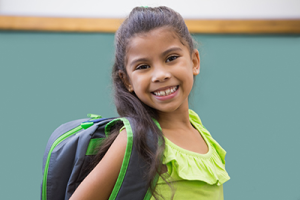
The need for self-esteem is the next level in Maslow’s Hierarchy of Needs. Self-esteem involves valuing and respecting oneself and learning that you are a good and worthy person. Self-esteem comes from within us, and from interactions and feedback from other people. When people become sick, injured, or disabled, their self-esteem may be affected. Young children and adolescents are especially vulnerable when it comes to developing positive self-esteem. Being sick may affect the way they see themselves. They may have many emotions about their appearance or physical disability. Home Health Aides/Personal Care Aides can help patients to accept physical changes by demonstrating their acceptance. Showing that they are okay with their physical or mental disability will tell the child that they accept them the way they are.
It is also important for HHAs/PCAs to encourage the child to perform as many activities as they can independently. This will help their self-esteem to grow. Treat each child as unique with special talents and strengths. Find out what the child’s interests and talents are and work to encourage their development. Young children need opportunities to play make believe. Home Health Aides/Personal Care Aides should provide lots of opportunities for the child to play and explore the world. This helps them to try on roles, such as learning to care for a baby doll or cooking with their pretend food.
Children can also develop self-esteem by assisting with household chores and being given responsibilities. This helps them to feel that they are contributing to their family. While parents may have the final say in what is best for their child, it is important to remember that the child also has a voice. Allow the child to express their thoughts and feelings and give them choices whenever possible. Home Health Aides/Personal Care Aides can ask children what outfit they would prefer to wear that day or what toy or activity they would like to play with. Remember to provide lots of praise and encouragement for children as this will help their self-esteem to flourish (grow).possible.
Need for Self-Actualization
he need for self-actualization is the highest level of Maslow’s Hierarchy of Needs. Self-actualization means that we try to be the best person that we can be and try to reach our full potential. The goals that we each set often change throughout our lives and may change as a result of experiencing an injury, illness, or disability. Remember that it is important to accept others the way they are. If a child has a physical or mental disability, the goals they set may need to be broken down into smaller pieces so that they are able to achieve them. An important part of development for children is that they learn to set and work towards goals. Home Health Aides/Personal Care Aides should help the children with whom they work set goals to achieve things such as learning to dress or feed themselves, completing a jigsaw puzzle, learning to read a book, or even learning to tie their shoes. Provide lots of encouragement and praise as children work towards new goals.