
Physical Needs
Physical Needs
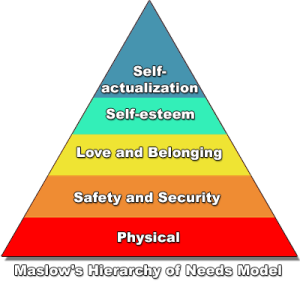
At the most basic level are our physical needs. These needs include oxygen, food, activity, sleep, sex, and elimination. These are the basic needs humans must meet in order to survive. Maslow believed that these needs must be met first before a person can go on to meet other needs, such as their psychosocial needs. Home Health Aides/Personal Care Aides, work to help their patients meet their basic physical needs. They assist them in completing Activities of Daily Living (ADLs), such as eating, drinking, toileting, bathing, and grooming. Taking vital signs, shopping for and preparing food for their patient, and measuring intake and output are other important tasks that Home Health Aides/Personal Care Aides do to help patients meet their physical needs.
Safety and Security Needs
After meeting our basic physical needs, we must have our safety and security needs met. This includes having a safe place to live and to not feeling afraid within our homes, or of the people around us. Home Health Aides/Personal Care Aides,work within the patient’s environment to make their home safe so that their patient feels safe. This means they will need to ensure that there are no hazards in the patient’s home such as clutter or loose rugs that could cause a patient to slip, trip, or fall. Checking to ensure safety and grab bars are secure to the wall and that non-slip tub mats and shower chairs are used ensures a safe environment for their patient.
Keeping the patient’s home clean and free from dirt by completing tasks such as laundry, vacuuming, and cleaning, maintains a safe environment for their patient. Ensuring that their patients properly use assistive devices such as canes and walkers also ensures their safety. Helping patients to meet their safety needs also includes taking care to properly wash hands and to wear gloves as appropriate, in order to prevent the spread of infection. People who are sick, or who may not be as independent as they used to, often feel afraid. The job of a Home Health Aide/Personal Care Aide is to help them feel secure by reassuring them, being patient when they try to complete tasks on their own, and being competent (good) in the tasks they complete.
Need for Love and Belonging
Once people have met their physical and safety/security needs, the need for love and belonging is the next important level in order for us to grow and flourish as humans. This need includes feeling that we are loved and cared for. Humans need to feel important to other people and to feel that they are a part of something, such as a family or community.
For Home Health Aides/Personal Care Aides, the way they care for their patients demonstrates to them that they care for and about them. This means being patient, kind, compassionate, understanding, trustworthy and accepting the patient’s thoughts, feelings, and uniqueness, even if they do not agree with them. Home Health Aides/Personal Care Aides can ask patients to share their memories and stories with them to help the patient recognize the importance they have in others’ lives. Family is an important part of a patient’s life and helps them to meet their need for love and belonging. We all have different views of what “family” means to us. Individuals must be careful not to judge who a patient considers part of their family. Include the patient’s family in their care if they wish for them to be involved.
Spirituality and religious practices may also be important parts of the patient’s life. Helping patients meet their spiritual and religious needs may help them to cope with an illness or disability. Remember that each of us has our own unique spiritual and religious views. It is important not to judge the beliefs of others and to allow the patient to practice what they believe. If a patient has particular dietary restrictions due to their religious belief, a Home Health Aide/Personal Care Aide must be sure to accommodate these. They must also allow their patient to have privacy to pray, practice religious rituals, and for clergy visits. If asked, they may read aloud religious materials and sit with their patient as they pray. A person does not have to believe in their particular religion in order to be respectful and to support a patient’s beliefs.
Need for Self-Esteem
The need for self-esteem is the next level in Maslow’s Hierarchy of Needs. Self-esteem involves valuing and respecting oneself. Self-esteem comes from within us, and from interactions and feedback from other people. When people become sick, injured, or disabled, their self-esteem may be affected. They may not see themselves the way they used to. They may have concerns about their appearance or physical disability. They may feel that others do not see them as a whole person. A Home Health Aide/Personal Care Aide can help patients to accept physical changes by demonstrating acceptance. This means they must watch their body language while caring for patients. There may be situations where a patient has an injury or wound that may be difficult to look at. It is important to remember that they are watching for a reaction. Showing that they are okay with the patient’s physical changes will tell the patient that they are accepted the way they are.
It is important to treat each patient as a unique individual with talents and strengths. Sometimes, people forget that they still have value as a person when they are sick. Home Health Aides/Personal Care Aides should get to know their patients to find out who they are as a person. Understanding their patients will allow the Home Health Aides/Personal Care Aides to help the patients see how valued they are as a person. Home Health Aides/Personal Care Aides can also help to increase a patient’s self-esteem by allowing them to be as independent as possible, providing encouragement when they are doing a task they have difficulty with, and giving praise when they are successful. Demonstrating that they value the patient’s feelings, values, and their beliefs also helps to increase a patient’s self-esteem.
Need for Self-Actualization
The need for self-actualization is the highest level of Maslow’s Hierarchy of Needs. Self-actualization means that we try to be the best person that we can be and try to reach our full potential. We each have different views of what being the best person means and what reaching our full potential means. It is important to remember to respect a patient’s thoughts and goals. The goals that we each set often change throughout our lives and may change as a result of experiencing an injury, illness, or disability. As a Home Health Aide/Personal Care Aide, it is important to accept others the way they are. Home Health Aides/Personal Care Aides are also in a position to help their patients work to accept themselves and to set and work towards new goals. It is important to remember that what a HHA/PCA views as a good goal may be different from the goal the patient wants to set. Using good communication skills is important to help patients work towards realistic and achievable goals.