
Cultural Awareness & Cultural Competence
Cultural awareness means how aware you are about the values and beliefs of other cultures. It is also means how much you appreciate the various aspects of the different cultures. Becoming culturally aware is a lifelong journey. It is nearly impossible to know all the customs and beliefs of every culture in the world. What is important for health care workers is to strive to learn as much as they can about the variety of cultures in our world. For each patient that they work with, they should ask them to tell them about their cultural beliefs and practices. In this way, they will always be learning about all the different cultures, and working to better understand and care for their patient!
Cultural competence goes along with cultural awareness. Cultural competence means the ability to incorporate cultural awareness into the health care practice. It means understanding and respecting a patient’s cultural beliefs and working with them in a way to demonstrate that you respect and honor these beliefs. For example, if a patient likes to pray before eating meals, and the Home Health Aide/Personal Care Aide provides and supports their prayer prior to their meals, they are practicing in a culturally competent manner. The more aware they become of different cultures, and the more they learn to appreciate differences, the more culturally competent they will become.
Introduction to Cultures
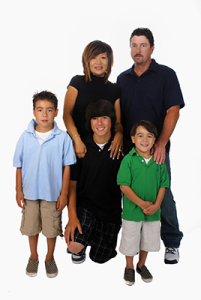
Explore the following links to learn more about some common cultures. Please note that this list of cultures is not comprehensive, meaning that there are many more cultures than those listed here. Remember also that the information here is to be used as a guide. Each person is unique. The information here is to provide some basic knowledge about the culture. It is also not intended to mean that just because a person is from one of the cultures listed here that they necessarily share the customs and beliefs described. It is important for the Home Health Aide/Personal Care Aide to get to know their patient, their beliefs, traditions, and values. It will make all the difference in their work with them and will lead to a positive working relationship! To learn more about various cultures and healthcare practices, visit Dimensions of Culture: Cross-cultural communications for Healthcare Professionals at.
African American

Africa is a continent that has dozens of different tribes, ethnic, and cultural groups, with hundreds of different languages and dialects spoken. A person may define themselves as “African” if they live in or come from one of the African countries. The term “black” is usually defined as people who descended from an African country. The term “African American” can be defined as “blacks” who are born in the United States but who descended from the African continent. Depending on family and cultural values and beliefs, people may prefer one term over the other as a way to identify themselves. Learn the terms a patient chooses to use to define their identity. It is important to remember that people cannot be defined by their skin color, as there are a variety of skin tones, from light to dark of people who define themselves as African American. Remember, a shared complexion does not necessarily mean there is a shared culture. It is important to find out the terms a patient uses to define their identity.
The structure of the African American family often includes extended family and people outside of the biologic family, or “fictive kin”. Elders are highly respected, with the woman often taking on a matriarchal role, although decision making may be done by either the mother or father. Families tend to avoid placing loved ones in long-term care facilities and instead care for their elders or disabled family members in the home.
African Americans often have ties to a religious community, with many having a Christian faith or following Islam. It is important to find out a patient’s’ religious or spiritual beliefs and to honor these. During times of illness and impending death, many African Americans turn to their faith. It is often important for extended family and friends to be present to gather around their loved one during times of imminent death (death that is likely to happen soon).
Due to the historical mistreatment of African Americans in healthcare, they may be mistrustful of healthcare providers and reluctant to participate in treatment or share personal issues. It is very important to work on building trust while providing health care.
Africa is a continent that has dozens of different tribes, ethnic, and cultural groups, with hundreds of different languages and dialects spoken. A person may define themselves as “African” if they live in or come from one of the African countries. The term “black” is usually defined as people who descended from an African country. The term “African American” can be defined as “blacks” who are born in the United States but who descended from the African continent. Depending on family and cultural values and beliefs, people may prefer one term over the other as a way to identify themselves. Learn the terms a patient chooses to use to define their identity. It is important to remember that people cannot be defined by their skin color, as there are a variety of skin tones, from light to dark of people who define themselves as African American. Remember, a shared complexion does not necessarily mean there is a shared culture. It is important to find out the terms a patient uses to define their identity.
The structure of the African American family often includes extended family and people outside of the biologic family, or “fictive kin”. Elders are highly respected, with the woman often taking on a matriarchal role, although decision making may be done by either the mother or father. Families tend to avoid placing loved ones in long-term care facilities and instead care for their elders or disabled family members in the home.
African Americans often have ties to a religious community, with many having a Christian faith or following Islam. It is important to find out a patient’s’ religious or spiritual beliefs and to honor these. During times of illness and impending death, many African Americans turn to their faith. It is often important for extended family and friends to be present to gather around their loved one during times of imminent death (death that is likely to happen soon).
Due to the historical mistreatment of African Americans in healthcare, they may be mistrustful of healthcare providers and reluctant to participate in treatment or share personal issues. It is very important to work on building trust while providing health care.
Asians
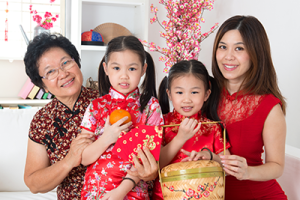
The term Asian is a general term for many different cultures that originate in an Asian country. People who consider themselves to be Asian may be Pacific Islanders (from Hawaii, Samoa, or Guam), Southeast Asians (from India, Vietnam, Thailand, Cambodia, Laos, Burmese, and Philippines), and East Asians (from China, Japan, and Korea). Each of these cultures has many different beliefs, norms, and traditions. It is important to not generalize from one Asian culture to the next. Get to know the patient and their beliefs and customs.
Generally speaking, Asians tend to be group and family oriented. This is known as a collectivist culture. Different from the typical individual oriented culture in the United States, decisions and actions are made as part of a group and with consideration to the effects on the group. Loyalty is very important to the family and family members’ behaviors are a reflection of the honor and respect shown to the family. Decisions are often made with the effects on the family in mind. Self-control is important, so expression of intense emotion such as crying, yelling, pain, or grief may not be shown. Many people from Asian cultures are not direct in conversation, and see such directness as rude. Many Asians may smile when confused or embarrassed, which can be mistaken as a sign of pleasure or understanding. Similarly, many Asians may also nod during conversation, which can also be mistaken as understanding during conversations about health care concerns and treatment. It is important to try to determine if a patient truly understands the situation. Many Asians pay careful attention to nonverbal cues during conversation such as gestures, tone of voice, eye contact, and silence. It is important to remember to pay attention to nonverbal cues and to try to understand those that are being conveyed by a patient. Much of the meaning of what is being conveyed (said) can be found in the nonverbal cues rather than the verbal words in Asian patients.
Many Asians believe in fatalism, or the belief that nothing can be done about a situation or one’s healthcare; it is decided by fate or karma. This may make Asian patients and families appear to be resigned to their situation. It is important to take care when discussing a health care situation or disease in how it is presented. While in the United States we often look at healthcare in terms of fighting a disease, Asian patients may not look at seeking treatment in this way. There also may be many healthcare practices outside of what Western medicine considers treatment, which are unique to each Asian culture.
Many Asian cultures focus on the holistic aspects of the body, or treating the body and mind, while Western medicine tends to only focus on treating the body. Herbal remedies and the use of acupuncture may be health care practices of many Asian patients. It is important if Home Health Aides/Personal Care Aides become of aware of the use of herbals and other medicines that they report these to their supervisor. While it is important to respect and honor cultural practices of patients, it is also important that the healthcare team knows which practices are being used. There are some herbs for example that interact with Western medications. Some Asian cultures also practice a technique called cupping, in which a glass or plastic cup is pressed against the skin, creating a vacuum in order to relieve the patient of pain and to treat respiratory diseases. If Home Health Aides/Personal Care Aides become aware of areas on their patient’s body such as burns or circles, it is important to ask the patient to explain them and to discuss findings with their supervisor.
Latinos

The term Latino means a person whose origins are from a Spanish speaking country, such as: Caribbean, Mexico, South America and Central America. Latinos often have a very deep sense of family connection, called familismo. These family members include extended members of the family and close friends whom they trust. They may be slow to trust outsiders. Family members, including extended members of the family such as grandparents, aunts and uncles may be very involved in the healthcare of the patient, and want to be present to help make healthcare decisions. It is very important to include all members of the family during health care decision making and care provision. This will help the patient and family to trust the health care worker and be willing to work with them.
Latinos are very focused on relationships. As such, it is important for Home Health Aides/Personal Care Aides to take their time during the provision of care, demonstrate warmth, touch, concern, friendliness, and a sense of confidence. Latinos feel great respect for physicians and healthcare providers as they believe in the importance of respect, or respecto, so may not want to question health care providers. This could result in not understanding healthcare treatment. Respect is very important for many Latinos. They may expect to be greeted and say goodbye with a handshake and “good morning/afternoon.” They may prefer a more formal address, such as Mr. or Mrs. In the presence of other family members or a husband or wife, all members should be greeted in such a way. The oldest male of the family has the greatest power of the family and decisions may be deferred to him. The concept of machismo means male Latinos are expected to be providers of the family and uphold the honor of their family. As such, female Latinos may defer decisions to their husbands or take on a more submissive role. Latinos may also have a belief in fatalism, which means there is little they can do to alter the course of their fate. This may result in delaying treatment or healthcare seeking behaviors.
Latinos may have many folk beliefs which influence their healthcare decisions and practices. Many Latinos may believe that people who suffer from physical illness do so because of an illness of emotional or spiritual origins. For example, some Latinos believe illness of a child may be caused by an evil eye or Mal de Ojo. The belief is that someone who strongly admires and wants the child has placed a spell on the child, resulting in illness. It is common for parents to place an amulet, or a azabache on the child in the form of jewelry to protect them against mal de ojo. A folk healer may treat the child by passing an egg over the child and placing it under the child’s pillow at night; if the egg cooks, then the child had mal de ojo.
Midlle East
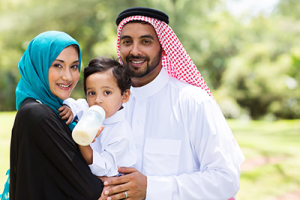
Countries associated with the Middle East traditionally include: Egypt, Iran, Iraq, Jordan, Kuwait, Lebanon, Palestine, Saudi Arabia, Syria, Turkey, and Yemen to name a few. People from the Middle East traditionally have a strong sense of affiliation with their family. Families and friends may be very close-knit and involved in the healthcare of the patient, with the elder member of the family expecting to be involved in health care decisions. Because of the close connection among those considered to be part of the patient’s close-knit circle, members of the family may have doubts about the intentions of healthcare providers and may need reassurance about having their family members’ needs taken care of. People of the Middle East may often prefer to have same-sex caregivers and have the eldest member of the family or the husband answer questions and make decisions for female patients. Direct eye contact with members of the opposite sex is frowned upon. Middle Easterners touch more frequently and tend to have a closer personal space during conversation than those from Western cultures. However, take care to remember gender differences, as too-direct contact for example between a male healthcare provider and a Middle Eastern female may be seen as a sign of sexual interest. Male Middle Easterners may have difficulties interacting with females who are in a position of authority, such as female physicians.
Middle Easterners generally value Western medicine but may have some folk beliefs such as illness being caused by the Evil Eye, or a person who is jealous, which causes the illness the patient is experiencing. Middle Easterners may also follow special diets and may not eat certain foods together at the same meal. Foods may be considered “hot” or “cold”. People of the Middle East may resist going to the hospital as it is seen as a place where people die. They may also be concerned that their loved one will not be cared for after death according to religious customs. Mourning for the death of a loved one is often loud and with great emotion expressed, as this is a sign of respect.