
What is Mental Health?
Mental health is the ability to adjust to the changes and stressors of life.
Mentally healthy people are people who are able to adapt to life changes and stressful situations in positive ways. Mentally healthy people are able to:
- Communicate their thoughts and feelings effectively
- Accept affection and love
- Give affection and love
- Accept and give compliments and praise
- Get along with and cooperate with others
- Listen to and respect those around them
- Control their impulses
- See consequences of actions
- Tolerate a certain amount of anxiety and frustration
- Take responsibility for actions and decisions
- Not blame others for what has gone wrong
- Respect themselves and others
- Accept disappointments and understand things do not always go their way
- Use positive coping skills to deal with their stressors
Mental health is important for good physical health. Having good coping skills is helpful for people to deal with changes that occur throughout the lifespan. If a person has positive coping skills and good mental health, they will better be able to deal with changes that occur if they or a loved one experiences physical illness or disability. Everybody becomes stressed, anxious, or depressed from time to time. Under great stress, even a mentally healthy person can exhibit (demonstrate) poor coping behaviors. This is normal. The difference for a mentally healthy person is that they already know good coping skills and will eventually begin to use them after they recover from the initial shock, grief, or stress of a situation.
Positive coping skills:
- Talk about feelings and thoughts with a trusted person.
- Write feelings and thoughts down on paper, such as in a journal.
- Engage in creative outlets such as writing poetry, working on art, creating music, cooking, building something, completing an activity, working on a hobby, or learning a new skill.
- Use self-talk to help one see the positive of a situation instead of the negative.
- Learn to forgive others when angry or disappointed.
- Turn to one’s religious or spiritual beliefs.
- Engage in physical activity or exercise.
- Set goals that are achievable and planning for the future.
- Practice meditation, yoga, deep breathing, and other relaxation techniques.
- Pray, attend a religious service, or speak with clergy.
- Look at the situation objectively in order to be more positive and realistic.
- Accept responsibility for your own part in a situation and figure out how not to do those same behaviors next time.
- Spend time with family and friends and meet new people.
Negative coping skills:
- Excessively worrying or obsessing about a situation.
- Blaming oneself for situations in which one has no control over.
- Seeking revenge to get even with someone who caused you harm.
- Withdrawing and isolating from others.
- Oversleeping or not sleeping enough.
- Overeating or not eating enough.
- Smoking or using nicotine.
- Drinking alcohol.
- Using medications or illegal substances to dull the pain and make you forget.
- Engaging in impulsive behaviors such as spending a lot of money, having unsafe sex, or making big decisions without carefully considering the consequences.
- Procrastinating and hoping things get better even though you are not dealing with them.
Defense Mechanisms

Defense mechanisms are special mechanisms that we use to deal with stressful situations or thoughts. Oftentimes they are unconscious (we are not aware we are using them). Defense mechanisms are used because they can help protect us from the unpleasantness of a situation, feelings of guilt, shame, rage, or profound sadness.
At one point or another, everyone uses defense mechanisms, even mentally healthy people. However, people who are mentally ill or those with poor coping skills use defense mechanisms more often. It is not healthy to use defense mechanisms on a regular basis as doing so prevents you from truly understanding and being able to change a situation, and from effectively coping with one’s stressors.
Unhealthy Coping Behaviors
- Projection: Making excuses or blaming others for one’s behaviors or actions. For example, a child who throws a toy at their sibling says, “She made me do it because she made me mad!”
- Rationalizing: one’s behaviors to justify the situation. For example, a teen who steals something from the store tells her parent, “But everybody does it!”
- Regressing: or becoming less mature. For example, an adult has a temper tantrum, or a child who is toilet trained begins to wet the bed.
- Denial: of thoughts or feelings about a situation. For example, a person who is angry at their spouse pretends they are not and denies they are angry when asked.
- Repressing: blocking out or “forgetting” a bad situation. For example, an adult who was sexually abused as a child “forgets” that they were sexually abused.
- Compensation: Making up for a lack in one area or having done something wrong by being good in another area. For example, a man who cheats on his wife brings her home flowers and takes her out to dinner to make up for what he did.
- Avoidance: of situations the person believes will be stressful or unpleasant. For example, a wife avoids going to the hospital to visit a friend because her husband passed away there recently.
- Displacing: feelings about a person or situation to another one. For example, a patient who has lost his leg is angry about that situation and takes it out on his family by yelling at them.
Physical Factors
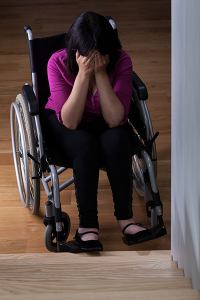
Physical illness, disability or even the aging process can cause or make mental illness worse. Substance abuse or intoxication from alcohol or other drugs may mask mental illness. This means that people who abuse alcohol or drugs on a regular basis may have a mental illness and not even know it. This is because some of the signs and symptoms of mental illness are similar to the behavior of an intoxicated person.
According to NAMI, about 9.2 million adults in the United States have both a mental illness and a substance abuse problem. A person who has had a traumatic brain injury (TBI) (suffered damage to the brain from a trauma) may also end up with changes in their personality, cognition, mood, and behavior. Chemical imbalances in the brain can cause mental illness. The brain has naturally occurring chemicals called neurotransmitters. It is thought that changes in neurotransmitters may cause mental illness. Changes in hormone levels can also cause mental health disorders.
Environmental Factors

There has been some research indicating that exposure to certain viruses, chemicals, or alcohol in the womb may also be linked to a person having a mental illness. Traumatic life experiences such as being in combat or experiencing sexual abuse or rape may also lead to a mental illness.
Genetic Factors
Genetic factors, or genes which we inherit, are also thought to have a role in mental illness. Mental illness has a strong genetic basis, which means that it tends to run in families. People are more likely to have a mental illness if their parent or close relative also has a mental illness. This does not mean that if your mother or father has a mental illness that you will also have one. It just means your chances are higher than if a person does not have a parent who has a mental illness. It is believed that environmental factors and stressors may trigger these inherited genes to result in mental illness.
Stress Factors

Mental illness may be brought about by stressors, such as traumatic events or poor interpersonal relationships with loved ones. A difficult break up, the death of a partner or child, or other loss such as loss of a job or pet can lead to mental illness. People may have difficulty coping during stressful situations and display signs and symptoms similar to those that people with mental illness display. In many cases after the initial reaction to the traumatic event and after the person receives help, the signs and symptoms go away.