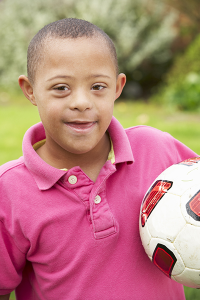
Types of Developmental Disabilities
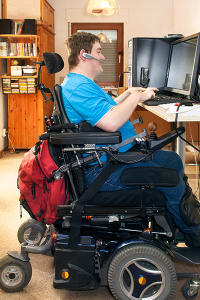
The impact on functioning and ability to achieve developmental milestones depends on the type of developmental disability the person has. Remember, each person is unique and has different strengths, talents, and areas they need help with. This is true for all persons, including people who have a developmental disability. It is important to always remember to treat each person as a unique individual who has strengths, who is part of a family, and who can make a positive contribution to their family and community. Every person, regardless of having special needs, has the same physical and emotional needs that everyone else has. The job of a Home Health Aide/Personal Care Aide is to help the person have their physical and emotional needs met by providing self-care and emotional support.
A person with a developmental disability may have more than one type of disability. For example, they may have an intellectual and a physical disability. Their ability to function may be impacted on both cognitive and physical levels. Remember though, that just because a person has one type of disability, such as a physical disability, that they do not automatically also have an intellectual disability. They may have physical impairments, but be at the average or above average level of functioning on an intellectual level. There are many different types of developmental disabilities. Some of the many developmental disabilities include intellectual disabilities, Down syndrome, cerebral palsy, autism spectrum disorders, ADHD, hearing and vision impairments, and learning disabilities. We will explore some of the many types of developmental disabilities.
Intellectual Disabilities

Intellectual disabilities have been commonly known as mental retardation, although this term is no longer used as it is offensive. Having an intellectual disability means the person’s cognitive ability is below the average for a person at their age. People with intellectual disabilities may range from having a mild to a severe intellectual impairment.
Physical, social, and communication problems may also occur in a person who has an intellectual disability. People with an intellectual disability may have a hard time communicating with others, letting their needs be known, coping, and performing ADLs. They may take a longer time to reach developmental milestones such as learning to crawl, walk, and speak, and may have problems learning in school.
Intellectual disabilities can occur due to any number of reasons, all of which occur before the person is 18 years of age. It can be caused by an injury, disease, problem in the person’s brain, trauma while the person is in the womb or while being born, or a genetic disorder. Fetal alcohol syndrome, Down syndrome, fragile X syndrome, and genetic disorders occur before birth, while the child is developing inside the womb. This means that the cause of the disability is due to an environmental factor, such as the ingestion of alcohol by the mother in fetal alcohol syndrome. In the case of Down syndrome or fragile X syndrome, a genetic mutation occurs while the baby is developing, and is what we call a congenital defect (a defect in the genes or chromosomes).
You can learn more about intellectual disabilities at CDC.gov (www.cdc.gov), which is your online source for credible health information and is the official Web site of the Centers for Disease Control and Prevention (CDC). You can link directly to information about intellectual disabilities at: http://www.cdc.gov/ncbddd/actearly/pdf/parents_pdfs/IntellectualDisability.pdf.
Cerebral Palsy
Cerebral palsy is a group of disorders that affect muscle coordination. Cerebral means pertaining to the brain. Palsy means weakness having to do with muscles. Cerebral palsy occurs due to brain damage that can occur while the baby is within the womb or during birth.
The symptoms of cerebral palsy vary from person to person. Some people have just some trouble with motor coordination (doing things like moving, walking, or controlling their hand movements). Other people with cerebral palsy may have severe impairments and be unable to walk, perform ADLs, and will rely on others for their care for the rest of their lives. While some people with cerebral palsy only have problems with their motor functioning and ability to control their muscles, some may also have intellectual, learning, vision, hearing, or speech problems.
Some of the symptoms you might see with a person with cerebral palsy include: spasticity (stiff muscles), dyskinesia (uncontrollable muscle movements), and ataxia (poor balance and coordination). In spastic cerebral palsy, which, according to the CDC, affects 80% of people with cerebral palsy, people have muscle stiffness, which affects their ability to move. They may have stiffness in both legs, one side of their body, or in both their arms and legs.
In dyskinetic cerebral palsy, people have trouble controlling their muscle movements and their movements may be jerky and uncoordinated. The ability to swallow and chew can even be affected.
In ataxic cerebral palsy, people have problems with coordination, which affects their ability to walk or perform activities easily. They may have trouble with fine muscle movement such as writing or using a fork and knife.
All of these types of cerebral palsy can affect a person’s ability to perform ADLs and to care for themselves. People with cerebral palsy may be able to live independently, or may require care throughout their lives.
You can learn more about cerebral palsy at CDC.gov (www.cdc.gov), which is your online source for credible health information and is the official Web site of the Centers for Disease Control and Prevention (CDC). You can link directly to information about intellectual disabilities at:http://www.cdc.gov/ncbddd/cp/facts.html
Autism

There are a variety of types of autistic disorders which can affect a person’s ability to communicate, their social interactions, and may cause behavioral problems. Autism ranges across what is called the autism spectrum. This means impairments may range from mild to severe.
Most people with autism appear to look like anyone else and do not have any obvious disability. People with autism can range in their ability to learn, communicate, interact socially, and behave. Some people with autism have severe learning, social, and behavioral impairments which greatly impact their functioning. Other people with autism are highly gifted and have above average IQ scores.
In early childhood, parents may begin to notice things in their child such as avoidance of eye contact, not liking physical contact such as hugging, having trouble interacting with others when they speak with them, difficulty being empathetic (understanding how another feels), repetition of words or actions, or seeming as if they are not interested in others around them or that they do not know how to interact with others. There may also be issues such as having a hard time adapting to changes in routines and behavioral issues such as temper tantrums when such changes occur.
According to the CDC, 1 in 68 children has an autism spectrum disorder. There is no known cause, but there appears to be a strong genetic link to having autism. This means if a sibling has autism, other children in the family are more at risk. According to the CDC, there is also evidence that suggests older parents, and some medications that women take while pregnant are linked to a higher risk of a child having autism.
While there is no cure for autism, early childhood interventions can greatly help a person with autism cope with social and emotional stressors, and learn to function as normally as possible. Speech, occupational, and behavior therapies may be included in the Care Plan. Medications may also be used to help with behavioral issues. People with autism may be able to live independently, or they may be dependent on others for their care.
You can learn more about autism at CDC.gov (www.cdc.gov), which is your online source for credible health information and is the official Web site of the Centers for Disease Control and Prevention (CDC). You can link directly to information about autism by following this link: http://www.cdc.gov/ncbddd/autism/facts.html
Neurologic Impairment
A neurologic impairment means that there is an impairment of functioning within the person’s nervous system (their brain and spinal cord). Neurological impairments could impact hearing, vision, motor coordination, speech, learning abilities, behavior, and cognitive functions. This could be due to genetic problems, or environmental factors, such as brain injuries. Examples of neurological impairments include vision problems, hearing problems, Tourette’s syndrome, and Attention Deficit Hyperactivity Disorder.
Tourette’s syndrome is a nervous system disorder in which people have what are called “tics”. Tics are repetitive behaviors involving the motor system (such as twitching or repetitive blinking) and vocal tics (such as grunting). These behaviors cannot be controlled by the person. A person with Tourette’s syndrome may have other behavioral or developmental disorders, or they may not.
Attention Deficit Hyperactivity Disorder (ADHD) is another type of neurological condition. ADHD is a very common childhood disorder which often lasts into adulthood. It involves difficulty with inattentiveness (trouble paying attention), hyperactivity (excessive activity), and impulsiveness (acting without thinking). People with ADHD may have difficulty paying attention or functioning in school or work, have trouble with social interactions, and may have behavioral problems. A person with ADHD may or may not have other behavioral, emotional, or developmental disorders. Behavioral interventions, medications, and support can help people with Tourette’s syndrome and ADHD function as independently as possible.
You can learn more about Tourette’s syndrome and ADHD at CDC.gov (www.cdc.gov), which is your online source for credible health information and is the official Web site of the Centers for Disease Control and Prevention (CDC). You can link directly to information about Tourette’s syndrome by following this link: http://www.cdc.gov/ncbddd/tourette/documents/tourette-fact-sheet_photo.pdf.pdf ; or ADHD information at this link:http://www.cdc.gov/ncbddd/adhd/documents/adhdfactsheetenglish.pdf
Multiple Disabilities
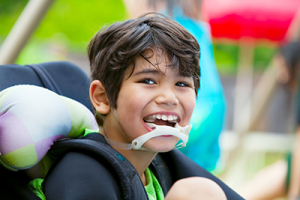
When a person has multiple disabilities, it means they have more than one type of disability. They may have a physical disability plus an intellectual disability. They may have a behavioral impairment that impacts their ability to learn, but have an average or above average intelligence level. It is always important for Home Health Aides/Personal Care Aides to find out about the unique strengths and needs of the person with whom they are working. Never assume that a person with a physical disability also has an intellectual disability and vice versa.
Effects of Developmental Disabilities on Growth and Development
Developmental disabilities impact growth and development in a variety of ways. It all depends on the type of disability and the functioning level of the person. No two people are alike. One person with Down syndrome may be able to live fairly independently while another person with Down syndrome may require constant supervision.
People with intellectual disabilities may have trouble with learning and require special help to learn skills such as reading, writing, and mathematics. Learning may occur at a slower rate compared to other children of the same age. People with cerebral palsy may have trouble with motor skills and require assistance learning how to perform ADLs independently, or may require total care. Their ability to learn motor skills such as walking and feeding may happen at a later time compared to other children of the same age.
A person who has autism may have impairments in communication and with social skills. They may need extra support and behavioral interventions to help them communicate and interact with others. Their ability to interact with others may take a longer time compared to other children of the same age.
Children and adults with neurological impairments may have trouble with their senses, such as vision and hearing. They may or may not have any other physical or intellectual disability. They may require assistance with learning how to function independently. Learning language and communicating with others for a child with a hearing or vision loss may happen at a later time compared to children of the same age.
It is important for Home Health Aides/Personal Care Aides to be familiar with the timeline for normal developmental milestones. If they notice that a child with whom they are working is not meeting developmental milestones, they should discuss their concerns with their supervisor. The health care team can further assess the child to see if special testing and additional resources and support would be helpful.
You can visit CDC.gov (www.cdc.gov), which is your online source for credible health information and is the official Web site of the Centers for Disease Control and Prevention (CDC). You can download a Milestone Moments booklet to use in your work with children and their parents at the CDC.gov’s website at:http://www.cdc.gov/ncbddd/actearly/pdf/parents_pdfs/milestonemomentseng508.pdf