
What is a Developmental Disability?
A disability is an impairment of functioning. Functional impairments may be physical (affect the body) or cognitive (affect mental functioning). A developmental disability is a disability that may affect physical, cognitive, learning, language, or behavioral development. This means that there may be a developmental delay in normal development (how a person grows and functions) or an impairment of functioning (the person may not be able to function according to normal developmental processes). Developmental disabilities occur across all gender, racial, ethnic, and socioeconomic groups. According to the CDC, about 1 in 6 children have a developmental disability or a developmental delay.
Developmental disabilities begin in young childhood, may impact a child’s ability to function in one or more areas, and may continue throughout the person’s life. Parents, caregivers, teachers, and medical professionals may notice that a child is not progressing according to normal developmental milestones. Developmental milestones are things that a child typically does around a certain age. For example, around 18 months old, a child is able to walk, is beginning to feed themselves, and can say several words. Around 5 years old, a child typically speaks clearly, can print letters and numbers, is able to toilet themselves, and can do things such as hop, skip, and jump. When parents and caregivers notice their child is not reaching typical developmental milestones, they may express their concern to a medical professional. The medical professional can assess the child using a variety of Developmental Screening Tools.
For more information on developmental milestones, you can visit CDC.gov (www.cdc.gov), which is your online source for credible health information and is the official Web site of the Centers for Disease Control and Prevention (CDC). You can link directly to information about Developmental Milestones at: http://www.cdc.gov/ncbddd/actearly/milestones/index.html.
How Does Having a Developmental Disability Affect Normal Development?
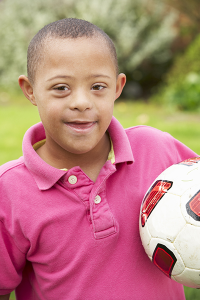
Having a developmental disability can affect normal development in a variety of ways. It all depends on the type of developmental disability the person has.
Self-Care & Movement.
The person may have trouble performing activities of daily living (ADLs) independently. They may be unable to perform tasks such as bathing, dressing, toileting, or feeding themselves. If the developmental disability impacts their physical functioning, the person may have trouble using their muscles. They may for example, be unable to control their muscle movements. This may affect their ability to perform ADLs, to walk, and to get from one place to another.
Financial Independence & Self-direction
The difficulty or inability to perform in a setting such as a work setting can impact a person’s ability to provide for themselves and support themselves financially. This impacts the person’s ability to live independently. They may need to rely on others to care for them for their entire lives. If a person needs to depend on others to care for them, they may feel an inability to make choices for themselves and to control the direction of their own lives.
Communication & Social Situations

The person with a developmental disability may have trouble communicating with others. They may have difficulties with speech, understanding speech, writing, or reading. The person may have trouble in social situations. In addition to communication problems, they may have difficulties understanding social situations. They may have trouble understanding social cues and things like nonverbal communication. This can be a source of great frustration for the person with a developmental disability. Having difficulties communicating with others can impact their ability to make friends and have the social support they need. This may impact their ability to perform in school, work, and in social settings.
Coping
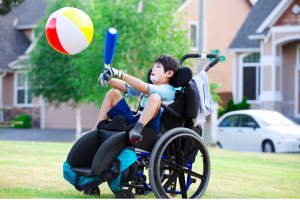
The person’s ability to cope with stressors may also be impacted. If a person has difficulties physically performing tasks, moving, communicating with others, being understood, supporting themselves physically and financially, they may have many different emotions. They may feel angry, frustrated, resentful, depressed, hopeless, guilty, and even embarrassed. They may also have a hard time letting others know their needs, wants, and feelings. Families with a person with a developmental disability may also have a difficult time coping. They too may feel angry, frustrated, resentful, depressed, hopeless, guilty, and even embarrassed. Home Health Aides/Personal Care Aides can help provide the emotional support the patient and family needs in addition to providing assistance with physical tasks such as feeding and dressing.