
Communication
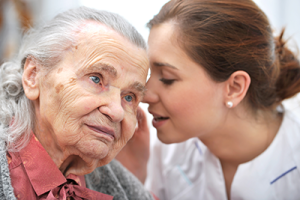
To effectively communicate, we must realize that we are all different in the way we perceive the world and use this understanding as a guide to our communication with others” –Anthony Robbins
Communication is the process of exchanging information with others and is a means for two or more people to connect. Communication is an essential part of the job of a HHA/PCA. They must be able to communicate with their supervisor, members of the healthcare team, the patient, and family members.
Principles of effective communication:
- Sender: the person who sends the message
- Receiver: the person who receives the message
- Feedback: the receiver responds to the message in some way to let the sender know they heard and understood the message.
Feedback is very important in communication. It is especially important in the work of a HHA/PCA. They must take the time to ensure that their patients understand the message you are trying to convey. During a communication, there is a repetitive cycle of sending-receiving-feedback between the communicators.
Types of Communication

There are two types of communication: verbal and nonverbal.
Verbal communication involves the use of words or sounds, which are either spoken or written.
Nonverbal communication is the way we communicate without using words. Shaking a head, rolling eyes, smiling, or crying are all nonverbal methods of communication. The receiver of the communication sees the nonverbal communication the sender demonstrates in addition to hearing the spoken word. Tone of voice is another important nonverbal method of communication. The tone of a person’s voice often reflects their mood and can convey a different meaning to a sentence. For example, you might say, “Oh, really?!” with an emphasis on the “Oh!” to convey your surprise. Take the same sentence and emphasize the “really” and it changes the meaning of the sentence to one of disbelief or sarcasm: “Oh, really?” Saying the same sentence with a different tone of voice and emphasizing certain words sends a completely different message. Body language is another form of non-verbal communication. The way we sit or stand with shoulders forward or slouched down, the way we hold our arms either crossed in front of our chest or at our sides all convey a message to the receiver. The way we use gestures, touch, and even silence also tells the receiver what we are thinking and feeling.
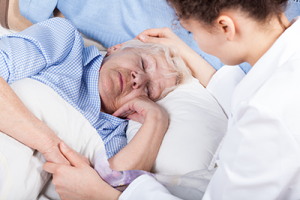
Sometimes, people send one message verbally and quite another non-verbally. We can often tell a person’s true feeling with the nonverbal message they send. For Home Health Aides/Personal Care Aides it is important to be aware of these incongruous messages (where one message contradicts another message). If a patient tells them, “I feel fine,” yet they sigh and are sitting with shoulders slumped down and appear to be crying, this is a good indicator that their verbal and nonverbal messages are incongruent (do not match). Home Health Aides/Personal Care Aides’ ability to be aware of these differences will help them provide the best care possible. When they do notice these confusing messages, they should try to find out if they are correct in their thinking. Say something like, “Mrs. Martin, you say you feel fine but it looks like you have been crying. Are you sad?” This helps to clarify if they have understood the message and can help open up the lines of communication for an important and honest discussion of how Mrs. Martin is really feeling.
Types of Communication – Summary

It is also important to be aware of the congruence of your own verbal and nonverbal messages. Does your body language match your words? Is your tone of voice upbeat or flat and uninviting? Are you making eye contact with a patient and smiling as you tell them you are glad to see them or are you looking at the floor when you say this rather than their eye? Patients will read into these mixed messages and feel that the HHA/PCA is not really glad to see them or to be taking care of them today.
The use of nonverbal communication varies from culture to culture. In some cultures, touch is an important part of communication. Yet, in other cultures, touching another person, especially if uninvited, is disrespectful. Eye contact is also another form of nonverbal communication that varies among cultures. Some cultures value eye contact while speaking, while other cultures consider eye contact while speaking rude. The proximity or closeness of how two people stand together during a conversation may also vary among cultures and personal preferences. Standing too close to someone during conversation could appear to be a threat to some people, while others value standing close to the person they are conversing with. It is important to get to know the patient and their cultural and personal preferences in order to be respectful of cultural differences. If Home Health Aides/Personal Care Aides are unsure, they should ask their patient to tell them about the values of their culture and follow their lead during conversation. If, for example, they startle when you touch their hand while talking, or pull their hand away from you, this is an indicator the person does not like to be touched while talking.
Language Barriers
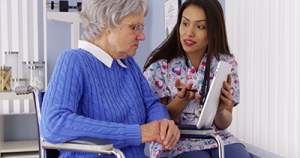
If a patient’s first language is a different language than that of the HHA/PCA, speak slowly and clearly with short and simple messages. Consider using pictures or pointing to objects if it is difficult to explain or for the patient to understand certain words. For instance, if the patient is having trouble understanding when the HHA/PCA asks if he would like to use the bedpan, they could show or point to the bedpan to convey their message. If their patient does not speak their language at all, they should speak to their supervisor about using a translator to assist them and their patient to communicate while they provide care. In some instances, family members may be able to translate for the patient. A word of caution with using family members to translate is that the patient may not be able to tell them what he or she really wants or feels as they may not want to upset their family member if their wishes go against what their family wants.
Hearing Impairment
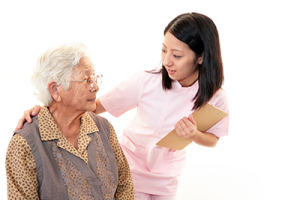
In patients who have a hearing impairment, meaning they have difficulty with hearing or are deaf, the HHA/PCA must be sure to stand directly in front of the patient so that they may see them during communication. If they have a hearing aid, check to make sure it is turned on, that the volume is high enough, and that the batteries are in good working order. Speak in a low, clear, and pleasant voice. Be careful not to shout or yell. Higher pitched tones such as yelling are not effective in helping a person hear. Even if the person can’t hear them, they will feel as if they are being yelled at by their body language. Be cautious to not become frustrated as a patient will pick up on nonverbal communication.
Visual Impairment
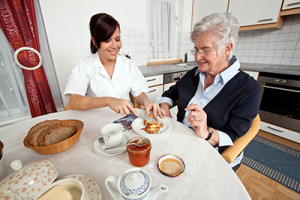
If a patient has a visual impairment, don’t forget that voice is not the only part of the conversation. It is important that they be able to see body language and facial expressions in order to understand the full effects of the message. If a patient wears glasses, be sure they are on and that the lenses are clean. In patients who are legally blind, Home Health Aides/Personal Care Aides should be careful to let them know where they are in relation to them and explain in detail any information that they could not pick up on without seeing. For example, if they are reading to a patient who is legally blind and there is a picture they cannot see, they should explain to the patient the picture in detail so that they can see it with their mind’s eye. When serving meals to a patient who is legally blind, they should place eating utensils where they can reach and tell them where they are in relation to their hands. Use the clock method to let them know where their food is. For example, “Mrs. King, your mashed potatoes are at 6:00.”
Aphasia/Speech Impairment
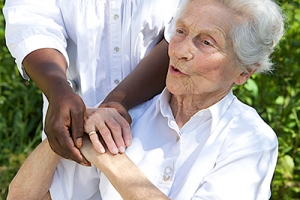
Patient speaking to HHA Sometimes people have speech impairments that make it difficult for them to send messages so that others can understand. Aphasia is a language disorder in which a patient has difficulty understanding or expressing language. People can develop aphasia as a result of a stroke, brain injury, or dementia. Listen very carefully to what a patient is trying to convey. Home Health Aides/Personal Care Aides should ask them for clarification if they are not sure of a word. They should not just nod and agree if they do not understand what they have said. It is just as, and perhaps even more frustrating for them to feel misunderstood or not heard as it is for Home Health Aides/Personal Care Aides to have trouble understanding their patient. In some instances, alternatives to voice may be used as effective means of communication. These can include white boards, chalk boards, and note paper so that the patient may write down what they wish to communicate. Providing these materials to their patient lets them know that the HHA/PCA cares about what they have to say and wants to ensure their needs are met.
Cognitive Impairment
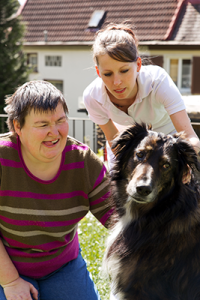
If a patient has a cognitive impairment, meaning that they have difficulty processing (understanding) information, take extra time when explaining something to them. They may need a longer period of time to try to understand the message being sent . Avoid long sentences. Use shorter, simple ones. Allow time for the patient to process what was said before moving on to the next sentence or topic. Check with the patient to make sure they understand. Sometimes people will agree with someone even if they do not understand, as they may be embarrassed or do not want you to become frustrated with them. Remember to be patient and kind. Home Health Aides/Personal Care Aides must watch their tone of voice, facial expression, and body language, as these all convey their true feelings.